The Bail Industry’s Art of the Deal: A Strategic Blueprint for National Reform

The Bail Industry’s Art of the Deal: A Strategic Blueprint for National Reform
Why the profession must stop reacting to reform and start writing it — and what seven months of doing exactly that has put on the record.
First published January 2026. Updated September 2026.
Donald Trump’s The Art of the Deal taught one essential truth: decide outcomes before others decide them for you. For the national bail profession — operating today under intense political, judicial, and media scrutiny — strategic intentionality offers the roadmap from defense to institutional strength.
At its foundation, the bail profession must lead from a simple truth: bail stands alone as the only constitutional pretrial mechanism delivering private-sector accountability for a public-sector obligation — at zero taxpayer cost. Any serious discussion of reform must begin there.
Success in any high-pressure environment is never accidental. We’ve spent decades reacting to individual bills, isolated court rulings, or last-minute threats. That reactive posture has proven costly.
The shift now required is straightforward but demanding: the profession must stop playing defense against vague notions of “reform” and begin defining the standards for pretrial justice itself. When industries fail to lead, strangers who never walked a courtroom rewrite their rules.
When this piece first ran in January, that was an argument. Seven months later, it is a record. The principles below are the original blueprint. What follows each of them is what the profession — and this writer — have put on the table since.
The legislative outcomes in New York and Illinois illustrate the failure clearly. In both states, the rules were written before bail professionals were ever in the room. In New York, the public debate ran on recidivism and wealth, while the profession’s appearance record — the outcome we deliver best — was never put in front of the legislature. In Illinois, the lesson runs deeper. Commercial surety bail had been prohibited there since 1963, so when the state eliminated cash bail outright in 2023, there was no seat at the table because there had been no table for sixty years. Strategic intentionality means drafting the proposals others must respond to, not pleading for amendments once the damage is done.
Mississippi has since shown what that looks like in practice. The Mississippi Bail Agents Association worked with the Mississippi Prosecutors Association to put a Bail Procedures Manual and statutory reference materials in the hands of the people who actually run the system — covering surrender procedures, bond discharge, failure-to-appear warrants, NCIC entry, and court records. The association took that same material on the road to judges, clerks, and prosecutors through the MBAA Education Program and to the Felony Prosecutors Conference in Oxford. Nobody handed us that agenda. We wrote it. In California, bail agents organized against SB 562, and in August the bill was held in Assembly Appropriations and placed under submission, stopping its advance for the session.
In the bail industry, leverage is data — not aggression, not rhetoric. Appearance rates, financial accountability, forfeiture enforcement, and the documented cost savings to taxpayers are not talking points; they are measurable outcomes.
When these metrics are consistently documented and presented, the bail profession ceases to be framed as a “special interest” and becomes what it actually is: a data-driven public safety mechanism. Advocates of unsecured release rely on theory and prediction models. Bail professionals rely on decades of observable results.
That data is now on the record, and much of it comes from outside the profession. Yolo County, California’s own District Attorney tracked one hundred zero-bail releases against defendants who posted bail over eighteen months and found a 78 percent rearrest rate for the zero-bail group against 33 to 44 percent for those who posted bond. Harvard’s Access to Justice Lab ran a randomized trial of Arnold Ventures’ risk-assessment tool in Dane County, Wisconsin, and found no statistically significant improvement in failure to appear, new criminal activity, or new violent criminal activity. The Bureau of Justice Statistics’ data on felony defendants in the nation’s largest counties has said for years that defendants released on financial conditions show up to court more reliably than those released on recognizance. I have laid all of it out in The Missing Metric of Justice, Ten Years After Bell v. City of Jackson, Eight Years Later, the Record Speaks for Itself, and The Limits of Actuarial Reform. The prediction model failed its own test. Accountability did not.
Show any judge our bond appearance rates next to unsecured release failures. Watch the room go silent. You’re not asking permission anymore. You’re handing them the answer.
Perception always precedes policy. One of the bail industry’s greatest vulnerabilities has been allowing others to define it. Opponents have framed the discussion around profit while ignoring the instability and repeat victimization that often follow unchecked release.
Controlling the narrative does not require exaggeration. It requires accuracy. Bail is the only pretrial system that enforces court compliance, absorbs financial risk, and provides accountability without shifting costs to the public. When a high-profile defendant reoffends on unsecured release, it’s malpractice if we don’t immediately ask: “What bond would have gotten this defendant back to court?”
Controlling the narrative also requires naming the other side. In January this piece called them “opponents.” They have a name now. The Anti-Surety Movement is a funded national network of advocacy organizations, litigation groups, foundations, policy shops, and nonprofit bail funds whose documented objective is to reduce, replace, or eliminate commercial surety bail. I documented who they are, who funds them, and what happens when their promises meet the results in The Anti-Surety Movement, published in August, after first laying out the money trail in Follow the Money: Who Really Profits From Ending Cash Bail? The same organizations that question a bail agent’s financial interest draw salaries, grants, and government contracts to advocate against him. That is not an accusation. It is their own Form 990. And when they reach for the “profit over people” caricature, the answer is already published: The Caricature Never Matched the Job and Who Bail Agents Really Are.
Deals are built on relationships, not transactions. Long-term credibility beats short-term wins. For the bail profession, episodic lobbying is insufficient. Sustainable influence requires year-round relationships with legislators, judges, prosecutors, and law enforcement leadership.
Law enforcement, in particular, remains one of the industry’s most underutilized allies. Officers on the street experience firsthand the consequences of “catch and release” policies. Aligning professional bail accountability with law enforcement realities creates a unified front. When sheriffs testify that “catch and release” generates their warrant backlog, floor votes follow.
Mississippi gave that argument a face in August when the Jones County Sheriff’s Department announced it would publish the names attached to nearly one thousand active warrants. A thousand open warrants in one county is not a bail problem. It is what happens when release carries no one’s obligation to bring the defendant back. The relationships behind From the Courtroom to the Capitol — with the Judicial College, the Attorney General’s Office, the prosecutors, and the sheriffs — were built over years, not booked for a hearing.
Strategic firmness is equally critical. Not every proposal labeled as reform is acceptable. The profession must clearly identify its non-negotiables. Constitutional bail rights and meaningful surety participation — true “skin in the game” — are not bargaining chips. They are the mechanisms that ensure court appearance and public safety.
Flexibility on procedural transparency, reporting standards, and professional accountability strengthens legitimacy. Compromising on the financial incentive that enforces compliance, however, is not reform. It is the abolition of the bail system itself.
The non-negotiable is constitutional, not commercial, and the profession has spent this year proving it. Where Does the Right to Bail Come From? traced the right from Magna Carta forward and became the most-read piece on my site. Before the Eighth Amendment and the George Mason installment of the Founders series showed that the excessive bail clause was written by one man in Virginia in 1776 and carried into the Bill of Rights nearly word for word. Preventive Detention laid out what replaces bail when surety is removed: the power to jail before trial on a prediction. That is the trade the Anti-Surety Movement is offering. We should say so every time.
Confidence, finally, must be anchored in competence. Confidence persuades only when supported by performance. For bail professionals, that means unapologetic adherence to ethical enforcement, statutory compliance, and high professional standards.
An industry that demands more of itself than regulators demand of it cannot be dismissed as a relic. Confidence signals not defiance, but indispensability.
That standard is being set from inside the profession. The MBAA Education Program and the Master Class Bail Agent Series are raising the floor on what a licensed agent is expected to know. Competency and Bail Pride put the expectation in writing, and the response from agents — speaking up, calling out bad actors, demanding their removal — says the profession heard it. Silence Is the Killer of Bail made the same point this article opened with: the agent who stays quiet leaves the room to the people who want him gone.
These principles provide the framework. By embracing intentional strategy, leveraging data, controlling the narrative, and operating with disciplined professionalism, the bail industry will define pretrial justice — because no alternative has earned the authority to replace what actually works.
In January that was a blueprint. Today it is a record, and the record is public. The work is not finished. But it is no longer theory.
 Michael D. Morrison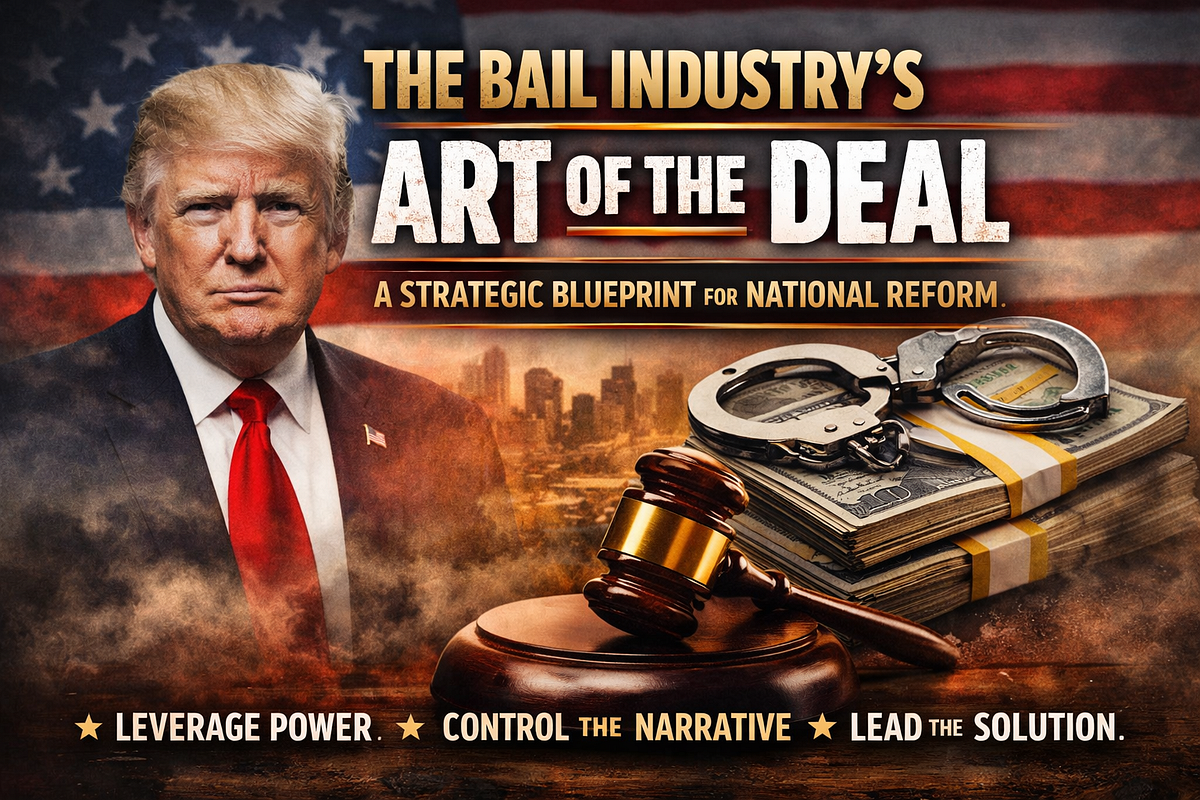
About the Author
Mike Morrison is the 2026 PBUS National Bail Agent of the Year, President of the Mississippi Bail Agents Association, and a nationally recognized bail educator, speaker, and criminal justice commentator. With more than 35 years of hands-on experience as a licensed Professional Bail Agent and owner of Mike Morrison Bail Bonding Company in Hattiesburg, Mississippi, he brings a practical, real-world perspective to discussions involving bail, criminal justice, constitutional rights, public safety, government accountability, technology, and public policy.
Morrison is recognized as a bail trainer by the Mississippi Judicial College and has been invited to present before judges, justice court clerks, prosecutors, bail professionals, and other criminal justice stakeholders, including as a guest speaker for the Mississippi Attorney General’s Office. He also leads professional education and ethics programs for bail agents across the country through the Master Class Bail Agent Series and other national training initiatives.
He has published nearly 200 articles examining the institutions, policies, and decisions that affect working Americans. His writing is grounded in decades spent inside courtrooms, jails, communities, and the criminal justice system, and his commentary has reached more than one million views across social media in 2026.
Independent, plain-spoken, and focused on accountability, Morrison writes and speaks about the intersection of government, liberty, public safety, professional responsibility, and the real-world consequences of public policy in Mississippi and across the nation.
© 2026 Mike Morrison. All rights reserved.