What Stops a Person From Pulling the Trigger?

Another Mississippi shooting raises a harder question about human behavior, respect for life, public safety, and fear of consequences.
Friday morning in Bolton, Mississippi, Tiffany Marshall was preparing to take her baby to daycare when gunfire struck her home. She told WLBT that she grabbed her baby to protect him and prayed, “Lord, please don’t let him kill my baby.” Hinds County Sheriff Tyree Jones later confirmed that 26-year-old Terrell Clayton had been arrested and charged with shooting into a dwelling house. Authorities have not released a motive or explained what led to the shooting.
The facts of this case do not tell us what was happening in the mind of the person accused, but they do raise a broader question worth asking: what happens inside a person before firing a gun toward an occupied home becomes something they are willing to do?
There is a physiological side to violent behavior. Extreme anger, fear, rage, or confrontation can trigger the body’s fight-or-flight response. Adrenaline and other stress hormones increase, heart rate and blood pressure rise, attention narrows, and the body prepares to react. At the same time, the areas of the brain responsible for judgment, restraint, and decision-making are supposed to control those impulses. When that control fails, emotion can overwhelm reason and impulsive aggression can follow.
But physiology does not remove personal responsibility. Millions of people become angry, frightened, humiliated, rejected, or enraged without firing into somebody’s home. Somewhere between emotion and action, a decision is still made. That is where self-control, judgment, personal values, respect for another person’s life, and fear of consequences are supposed to matter.
Firing into an occupied house crosses an enormous line. A person pulling that trigger cannot know exactly where everyone inside is standing, whether a child is behind a wall, or where a bullet may travel after entering the structure. The possibility of killing someone who had nothing to do with the conflict is obvious. When that danger is not enough to stop the act, it is reasonable to ask whether some of the restraints that normally protect society have weakened.
That includes respect for human life and respect for public safety, but it also includes fear of the criminal justice system. Are some offenders reaching the point where arrest, prosecution, jail, and punishment no longer carry enough weight to stop them before they act?
Research on criminal deterrence gives that question some foundation. The National Institute of Justice has repeatedly found that people are more likely to be deterred when they believe they will actually be caught than when government simply threatens severe punishment. In plain language, the system works best as a deterrent when people believe law enforcement will find them, warrants will be served, courts will act, and consequences will follow.
That matters in Mississippi because public safety depends on more than what happens after a violent crime. It also depends on whether the criminal justice system creates enough confidence in accountability to discourage the next one. Police officers, prosecutors, judges, jails, and bail agents cannot control every decision an individual makes, but the system can establish whether violent conduct is followed by swift and certain consequences.
The Bolton shooting gives us a disturbing picture of a mother holding her baby while gunfire strikes her home. It also gives Mississippi reason to examine something larger than one criminal case. What restrains a person before violence occurs? Physiology is part of that discussion, but so are self-control, respect for life, concern for innocent people, and the knowledge that choosing violence will bring consequences.
When those restraints weaken, public safety weakens with them.
 WLBT Staff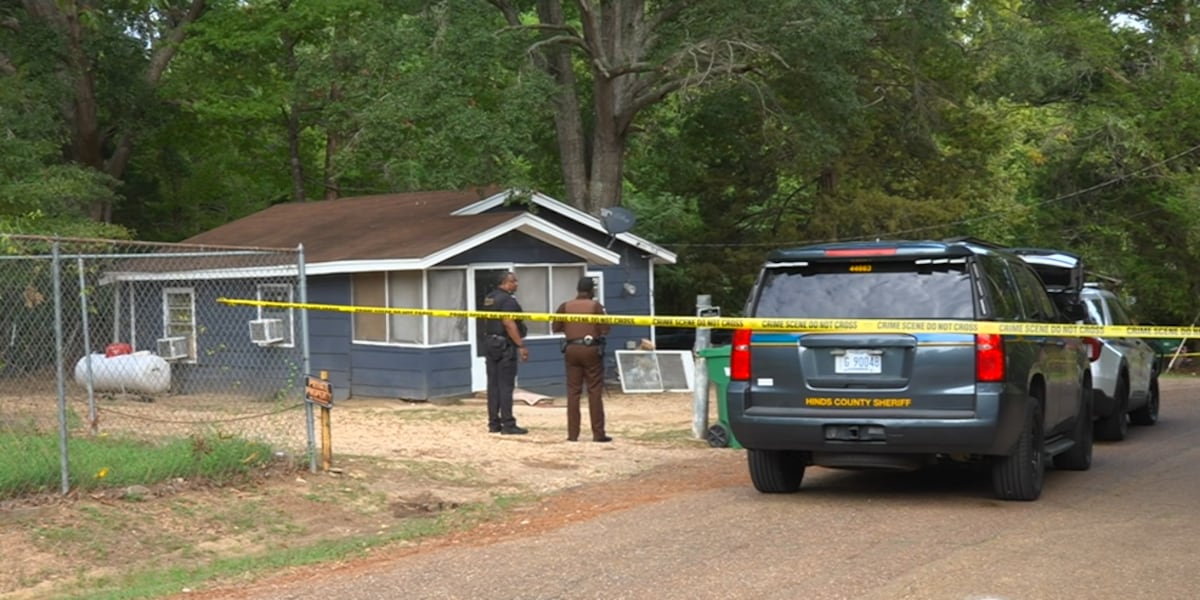
About the Author
Mike Morrison is the 2026 PBUS National Bail Agent of the Year, President of the Mississippi Bail Agents Association, and a nationally recognized bail educator, speaker, and criminal justice commentator. With more than 35 years of hands-on experience as a licensed Professional Bail Agent and owner of Mike Morrison Bail Bonding Company in Hattiesburg, Mississippi, he brings a practical, real-world perspective to discussions involving bail, criminal justice, constitutional rights, public safety, government accountability, technology, and public policy.
Morrison is recognized as a bail trainer by the Mississippi Judicial College and has been invited to present before judges, justice court clerks, prosecutors, bail professionals, and other criminal justice stakeholders, including as a guest speaker for the Mississippi Attorney General’s Office. He also leads professional education and ethics programs for bail agents across the country through the Master Class Bail Agent Series and other national training initiatives.
He has published nearly 200 articles examining the institutions, policies, and decisions that affect working Americans. His writing is grounded in decades spent inside courtrooms, jails, communities, and the criminal justice system, and his commentary has reached more than one million views across social media in 2026.
Independent, plain-spoken, and focused on accountability, Morrison writes and speaks about the intersection of government, liberty, public safety, professional responsibility, and the real-world consequences of public policy in Mississippi and across the nation.
© 2026 Mike Morrison. All rights reserved.