The Public Judges Bail Agents in a Tenth of a Second
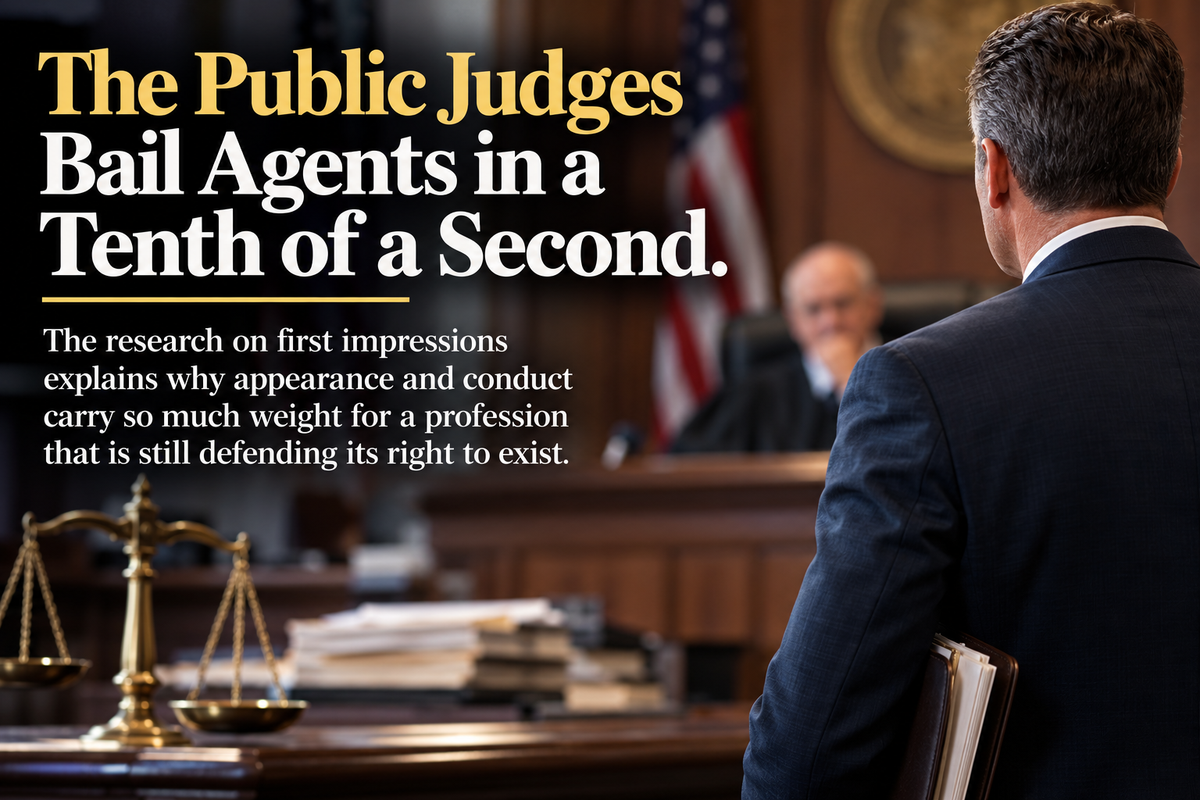
The research on first impressions explains why appearance and conduct carry so much weight for a profession that is still defending its right to exist.
People decide whether to trust a stranger faster than most of us would believe. In a 2006 study published in Psychological Science, Princeton researchers Janine Willis and Alexander Todorov showed participants photographs of unfamiliar faces for as little as one-tenth of a second. The judgments formed in that tenth of a second, including whether the person looked trustworthy and competent, closely matched the judgments other participants made with no time limit at all. More time did not change the verdict. It mostly made people more confident in it. Todorov was careful to say that a first impression can be overcome, but it arrives before any evidence does, and everything that follows gets measured against it.
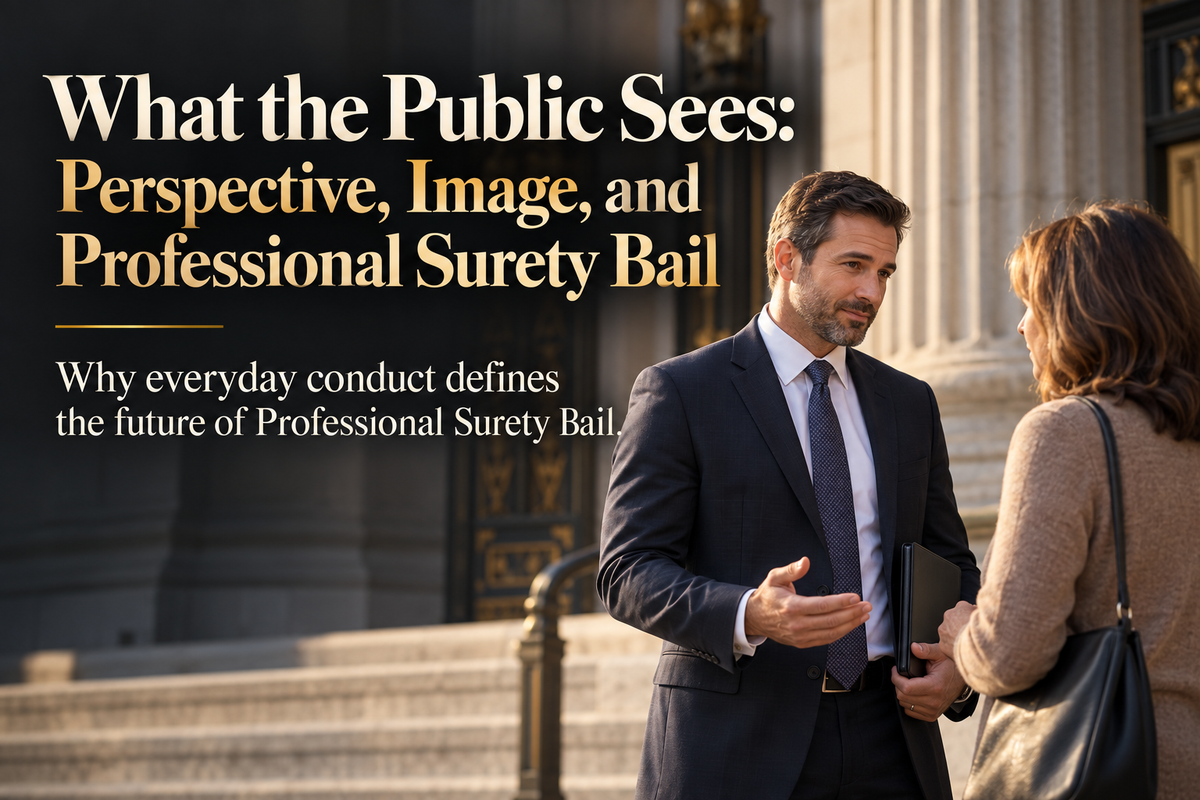
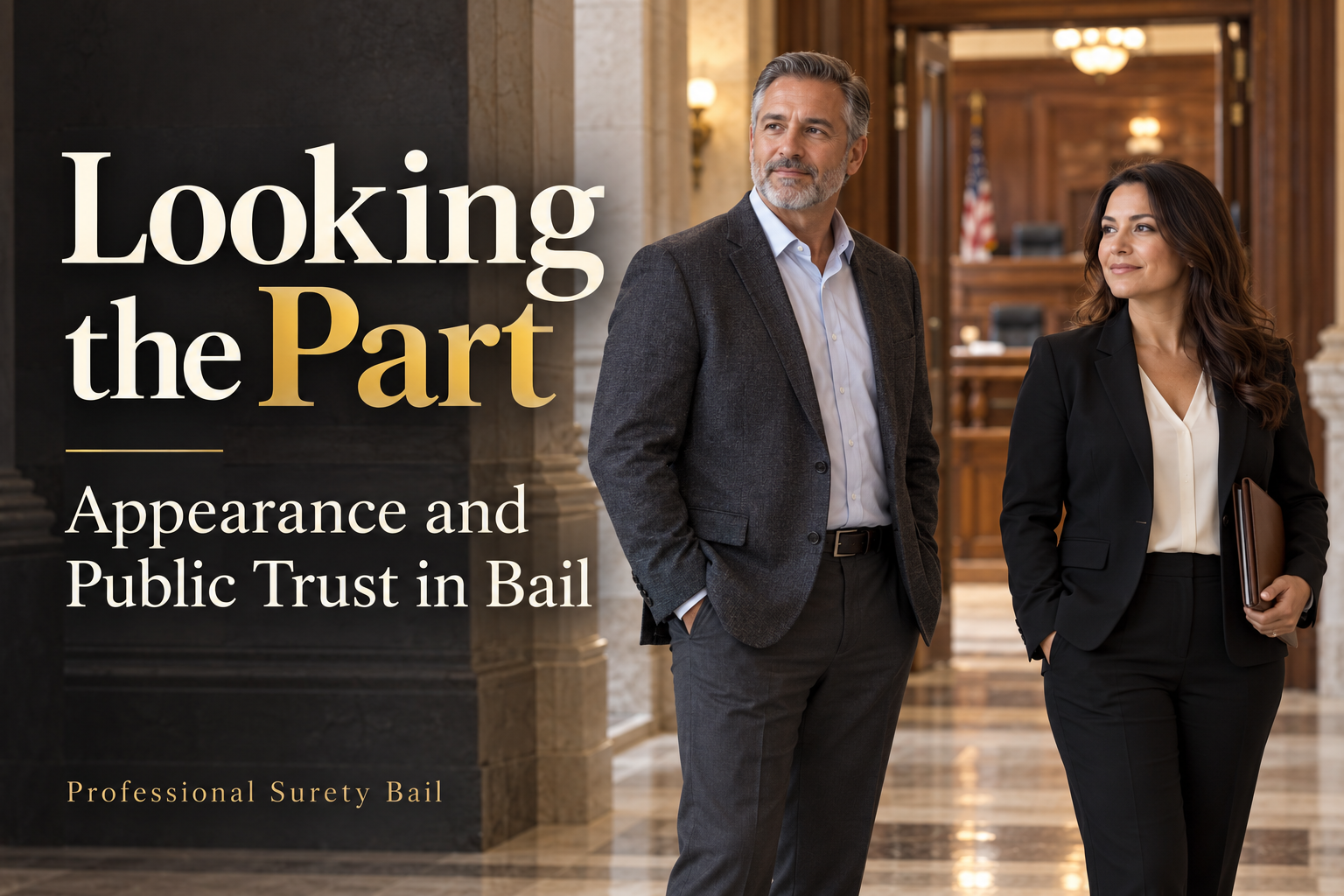
That finding should settle an argument our profession keeps having with itself. In What the Public Sees: Perspective, Image, and Professional Surety Bail, I wrote about conduct: how we treat families, clerks, and clients, what we post online, and how our reputation reaches a judge or legislator before our argument does. In Looking the Part: Appearance and Public Trust in Bail, I laid out a practical dress standard for the courtroom, the detention facility, the office, and the conference room. Some agents treat both subjects as matters of personal style. The research says otherwise. Before we explain a fee, post a bond, or make our case to a judge, the people in front of us have already formed an opinion, and they spend the rest of the conversation looking for reasons to confirm it.
Medicine has studied this question directly. In 2018, BMJ Open published a survey of 4,062 patients at 10 academic medical centers across the United States. Patients were shown photographs of the same physicians in different attire and asked to rate them on traits that included trustworthiness and knowledge. More than half said physician attire was important to them, and more than a third said it influenced their satisfaction with their care. Formal attire with a white coat rated highest overall. Patients 65 and older preferred it most strongly, and the preference for formal dress ran stronger in the South. The researchers concluded that what a doctor wears cannot replace good care, but it may affect how willing patients are to trust the doctor providing it.
Consider what that means for us. Physicians do not have to defend the existence of their profession. No one is putting the family doctor on the ballot. Bail agents work every day in front of people who have been told by well-funded advocacy groups that our profession should not exist, and on November 3, voters in Indiana and Tennessee will decide whether to rewrite their state constitutions to restrict the right to bail. If patients who already trust medicine still judge their doctor by his clothes, the people evaluating us will not be more forgiving. Mississippi agents should pay particular attention to the finding that Southern respondents leaned hardest toward formal dress. Those are the expectations of the communities we serve and the courtrooms we stand in.
Appearance only buys the first moment. Conduct decides whether that first impression holds. A pressed jacket in the courtroom does not survive a careless post on Facebook that evening, and online there is no handshake, no tone of voice, and no chance to explain. For the thousands of people who will only ever know us through a screen, the snap judgment Todorov measured is the only judgment they will make. That is why the two subjects I wrote about separately cannot really be separated. One opens the door, and the other determines whether we are allowed to stay in the room.
None of this requires expensive clothes or a public relations firm. It requires agents who understand that the public decides in a fraction of a second and then spends years confirming that decision. We cannot control how fast people judge us. We can control what they see when they do, and for a profession whose future is being decided in courtrooms, legislatures, and ballot boxes, that choice deserves our full attention.
 Michael D. Morrison
 Michael D. Morrison
About the Author
Mike Morrison is the 2026 PBUS National Bail Agent of the Year, President of the Mississippi Bail Agents Association, and a nationally recognized bail educator, speaker, and criminal justice commentator. With more than 35 years of hands-on experience as a licensed Professional Bail Agent and owner of Mike Morrison Bail Bonding Company in Hattiesburg, Mississippi, he brings a practical, real-world perspective to discussions involving American legal history, institutional accountability, constitutional rights, public safety, technology, and public policy.
Morrison is recognized as a bail trainer by the Mississippi Judicial College and is a sought-after guest speaker for judicial, prosecutorial, and industry conferences across the country. He has presented before state judges, justice court clerks, prosecutors, attorneys general staff, and bail professionals nationwide, and he travels to state bail association conferences to speak on bail and on social media strategy for the profession. He also leads professional education and ethics programs for bail agents through the Master Class Bail Agent Series and other national training initiatives.
At the national level, Morrison works with the Professional Bail Agents of the United States (PBUS) Board of Directors and supports its committees on national initiatives. He also works with the boards of directors of other state bail associations, sharing the strategies behind Mississippi’s successes so they can be put to work across the profession.
He has published nearly 200 articles examining the institutions, policies, and decisions that affect working Americans. His writing is grounded in decades spent inside courtrooms, jails, communities, and the criminal justice system, and his commentary has surpassed 1.75 million views across social media in 2026.
Independent, plain-spoken, and focused on accountability, Morrison writes and speaks about the intersection of government, liberty, public safety, professional responsibility, and the real-world consequences of public policy in Mississippi and across the nation.
© 2026 Mike Morrison. All rights reserved.