Behind the Scenes in the Life of a Bail Agent
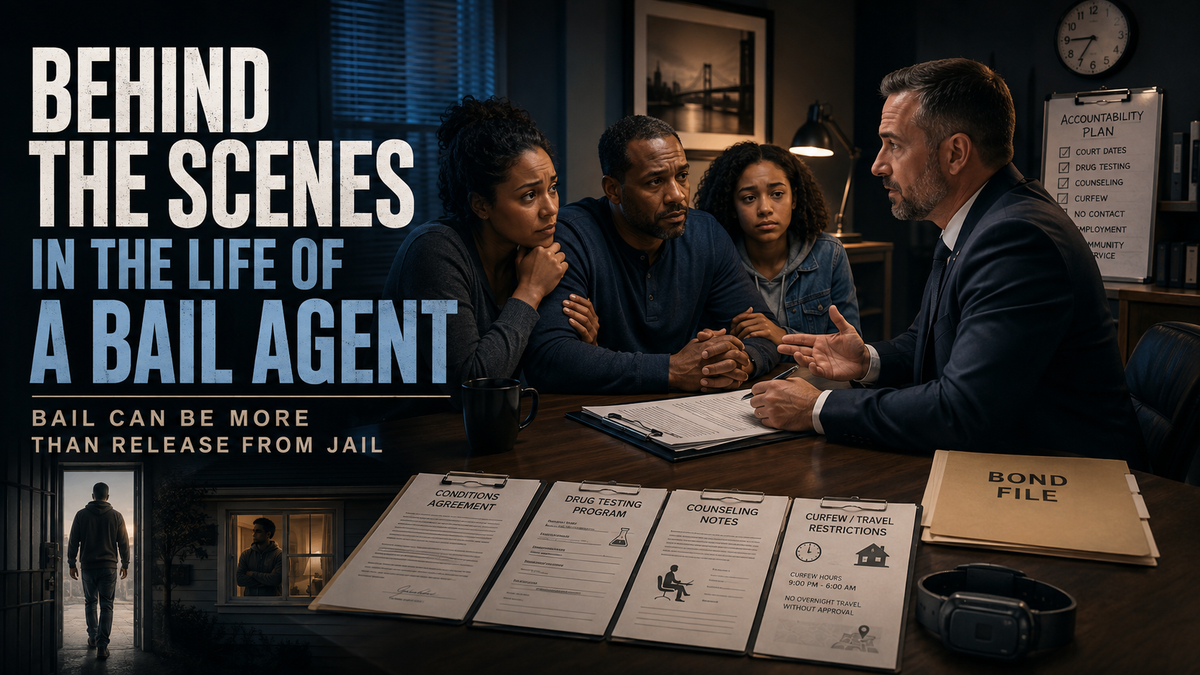
Most people think a bail bond is simple: money is posted, the defendant walks out of jail, and the case proceeds. What they do not see is the moment a parent or relative sits across from a bail agent and says, “We’ll pay the premium, but only if he has to do more than just stay out of trouble.”
That is when the job changes.
Families who have already lived through drug use, alcohol abuse, failed jobs, missed school, or destructive associations often treat an arrest as their remaining leverage. They are willing to post the bond, but they want conditions attached: random drug testing, counseling, employment requirements, curfews, travel limits, or even mandatory inpatient treatment. These are not court-ordered terms. They are private agreements developed with the people paying the premium—the ones who know the defendant’s history better than anyone in the legal system.
Before the bond is written, the conditions must be put in writing, explained, and accepted. Everyone needs to understand the stakes. Once the defendant is released, the bail agent becomes the one who receives the test results, confirms attendance at counseling, fields travel requests, talks with the family when things start to slip, and decides what happens when they do.
That responsibility is significant. Under the contract, the agent often has the authority to surrender the defendant back into custody and cancel the bond if the agreed conditions are ignored—whether through repeated failed drug tests, abandoned treatment, or unauthorized travel. It is a serious step that creates more work for the agent, more stress for the family, and another trip to jail for the defendant. None of this is visible to the public, which usually sees only the release.
Maintaining these special conditions requires constant cooperation among three parties: the defendant who wants to remain free, the family trying to enforce accountability, and the bail agent monitoring the arrangement. The practical reality means late-night calls, documentation, follow-up, and uncomfortable conversations. A bail agent is not a counselor or a social worker, but there are times when the job reaches far beyond writing a bond.
The arrangement does not always succeed. No amount of monitoring can force someone to change if they have no intention of changing. But the structure itself gives families something they have been unable to create on their own. The defendant wants to stay out of custody, the family wants different choices, and the bond becomes the pressure point.
Years later, the reward, when it comes, is rarely dramatic. You run into a parent at a grocery store or a shopping mall. They stop you and say the former client has a steady job, got married, or has a child on the way. Then they thank you for helping during one of the worst periods of their lives.
Those moments do not appear on an invoice. There is no line item for the failed drug tests, the hard discussions, or the extra hours spent trying to keep someone on a better path.
The life of a bail agent has its unpaid rewards.
ABOUT: Mike Morrison has spent 35 years working as a Professional Bail Agent in Mississippi, building a career grounded in firsthand experience with defendants, families, courts, law enforcement and the day-to-day realities of the criminal justice system. His commitment to education has led to recognition as a bail trainer by the Mississippi Judicial College and invitations to speak before judges, justice court clerks, prosecutors and other criminal justice professionals, including as an invited guest speaker for the Mississippi Attorney General’s Office.
For nearly two years, Morrison has worked to develop the Master Class Bail Agent Series with one goal: to elevate the knowledge, professionalism and value of the modern Bail Agent. The series draws from decades of practical experience and focuses on giving Bail Agents a deeper understanding of the laws, procedures and responsibilities that allow them to better serve their clients, their courts and their profession.