Bail Scams Did Not Start Yesterday
How Artificial Intelligence Is Supercharging a Crime That Has Targeted American Families for Nearly Two Decades
The sudden attention being given to bail scams can leave the impression that this is a new crime. It is not. The FBI was warning the public about the “grandparent scam” in 2012 and reported that its Internet Crime Complaint Center had been receiving complaints since 2008. The scheme was brutally simple: convince someone that a loved one had been arrested, create panic, demand immediate bail money and disappear with the cash. By 2013, federal prosecutors were charging people accused of using that exact story to steal thousands of dollars from elderly victims across the country.
What has changed is the criminal’s toolbox. Public arrest information, social media, electronic payment systems and caller-ID spoofing allow a thief to build a believable story faster than ever. In Oklahoma this year, families have reportedly been contacted within minutes of an arrest. One retiree lost $2,500 after a caller posing as a jail official knew detailed information about her family. Other schemes have included fake ankle-monitoring fees, phony paperwork and impostors claiming to represent law enforcement, pretrial programs or legitimate bail professionals.
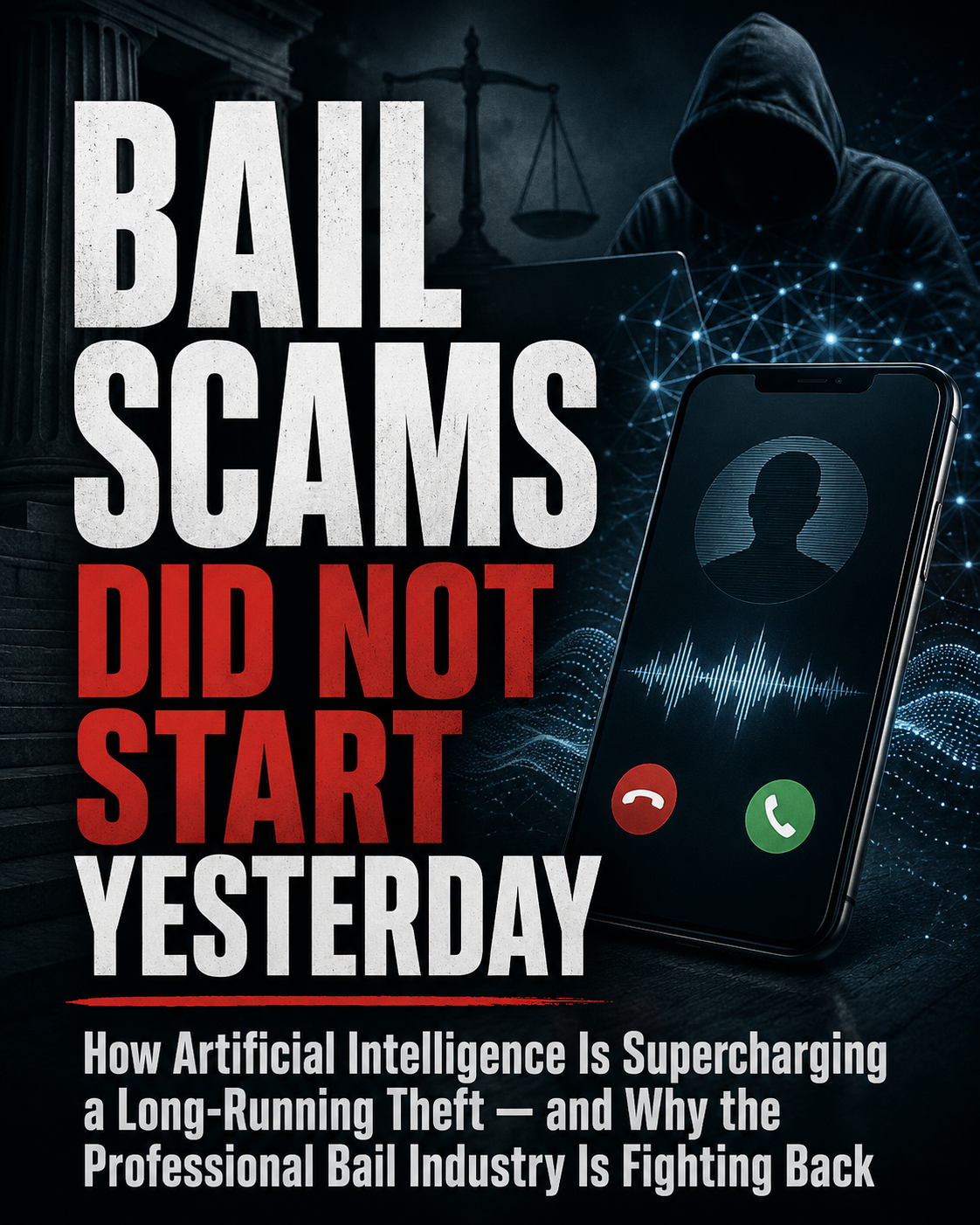
Artificial intelligence takes the threat another step. The Federal Trade Commission has warned that a scammer can clone a person’s voice from a short audio sample obtained online. A parent or grandparent may no longer hear an unknown criminal describing an emergency; they can hear what appears to be their own child or grandchild asking for help. Combine that voice with real arrest information, a spoofed telephone number and a demand for payment through Cash App, Venmo, cryptocurrency or another electronic method, and the old telephone scam becomes far more convincing.
This is why the professional bail industry has become increasingly vocal. The Bail Media Resource Center now documents appearances involving PBUS President David Stuckman, Oklahoma Bondsmen Association President Tracey Halley-Terrell, North Carolina Bail Agents Association President Julie Henderson and Colorado Association of Professional Sureties President Nicole Martinez. Through podcasts, radio, television and print coverage, bail professionals are warning families how these crimes operate and how quickly fear can overwhelm common sense.
And we need to call this what it is. “Scam” describes the method. Theft describes the crime.
State bail associations, PBUS and the Bail Media Alliance are helping bring national attention to a problem that existed long before AI made it easier. The next step must be relentless public education: verify the arrest independently, call the jail directly, confirm the bail agent is licensed, and never allow urgency—even a familiar voice—to replace verification. Professional bail did not create this problem, but our profession is in a unique position to help stop families from becoming its next victims.
https://www.youtube.com/results?search_query=bail+scams+
Mike Morrison has spent 35 years working as a Professional Bail Agent in Mississippi, building a career grounded in firsthand experience with defendants, families, courts, law enforcement and the day-to-day realities of the criminal justice system. His commitment to education has led to recognition as a bail trainer by the Mississippi Judicial College and invitations to speak before judges, justice court clerks, prosecutors and other criminal justice professionals, including as an invited guest speaker for the Mississippi Attorney General’s Office.
For nearly two years, Morrison has worked to develop the Master Class Bail Agent Series with one goal: to elevate the knowledge, professionalism and value of the modern Bail Agent. The series draws from decades of practical experience and focuses on giving Bail Agents a deeper understanding of the laws, procedures and responsibilities that allow them to better serve their clients, their courts and their profession.