The Algorithm Failed. Taxpayers Shouldn't Fund the Failure.
A Harvard randomized trial found that Arnold Ventures’ Public Safety Assessment failed to produce meaningful improvements in court appearance, new criminal activity, violent crime, pretrial detention, or racial fairness—raising serious questions about replacing professional surety bail with taxpayer-funded prediction systems.
This should be a wake-up call for every legislator, judge, county official, and taxpayer considering replacing professional surety bail with government-funded pretrial programs built around predictive risk assessments.
The Public Safety Assessment was created to predict whether a defendant released before trial would fail to appear, be arrested for new criminal activity, or be arrested for new violent criminal activity. Dane County, Wisconsin, did something particularly important: instead of simply accepting those promises, it agreed to put the system through a randomized controlled trial conducted by the Access to Justice Lab at Harvard Law School. Half of the selected cases received the PSA information and half did not, allowing researchers to measure what the assessment actually changed.
The results deserve national attention. The PSA changed some of the decisions being made by court commissioners, but those changes did not produce statistically significant improvements in failures to appear, new criminal activity, new violent criminal activity, pretrial incarceration days, or racial fairness. In fact, new criminal activity occurred in 28 percent of the cases where the PSA was available compared with 27 percent where it was not. The researchers summarized the result plainly: the hoped-for improvements did not materialize.
Even more significant, the Harvard researchers identified the PSA's inability to classify risk well as one of the likely explanations for the results. They found that the different PSA failure-to-appear scores provided surprisingly limited differentiation in actual failure-to-appear rates, with similar findings for new criminal activity and new violent criminal activity.
That is an important finding because the Anti-Surety Movement has spent years telling lawmakers that algorithms, risk scores, and taxpayer-funded pretrial systems represent a more scientific way to make release decisions. But putting a number beside someone's name does not make that number predictive, and calling a program “evidence-based” does not eliminate the obligation to produce evidence that it works.
Professional surety bail operates on a fundamentally different principle. It does not attempt to predict human behavior with an algorithm. A licensed bail agent accepts responsibility for a defendant's appearance, remains involved while the bond is active, and has a direct financial and professional obligation when that defendant fails to appear. That accountability is privately funded rather than transferred to taxpayers.
Mississippi should demand evidence before dismantling a system of direct accountability in favor of another government program. When advocates ask taxpayers to fund risk assessments, expanded pretrial agencies, additional employees, monitoring programs, technology, offices, equipment, and supervision, we should ask a very simple question:
If the system cannot reliably predict the risk and does not improve the outcomes, why are taxpayers being asked to pay for it?
— Mike Morrison
President
Mississippi Bail Agents Association
 Ella Hanley
 Eric Granof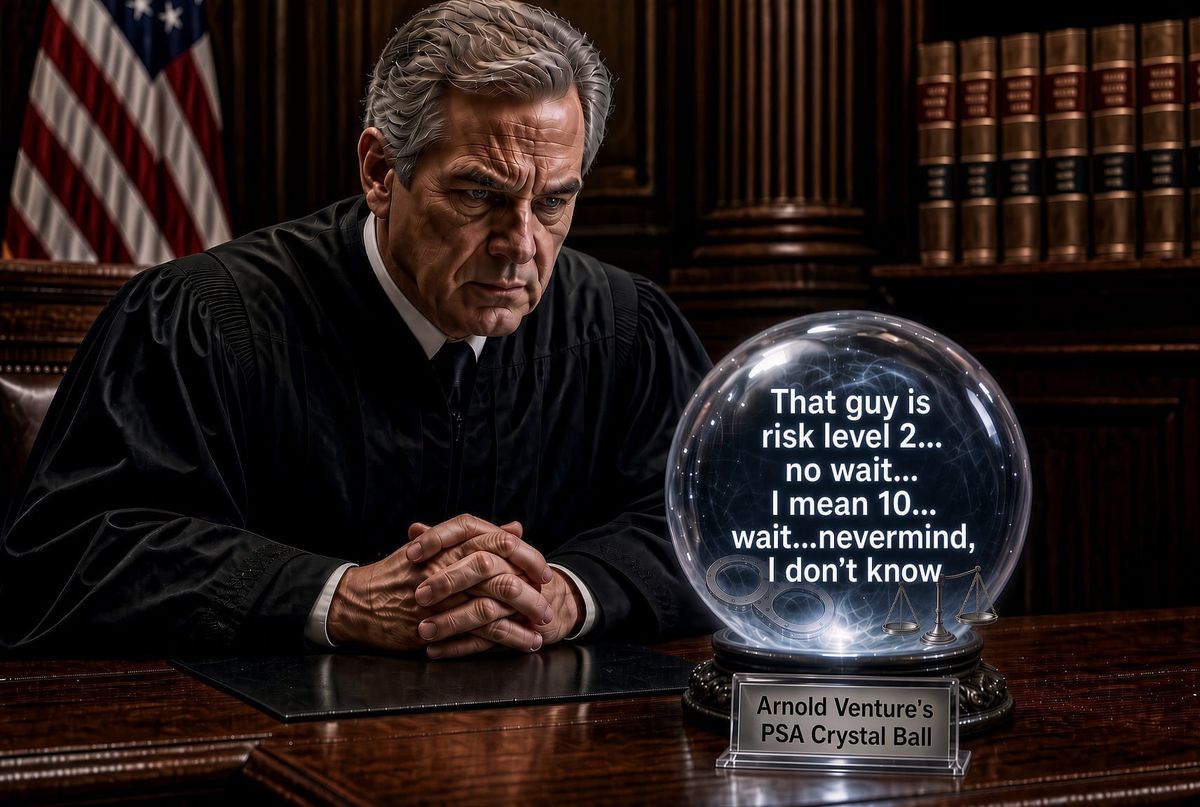
About the Author
Mike Morrison is the 2026 PBUS National Bail Agent of the Year and President of the Mississippi Bail Agents Association. With more than 35 years of hands-on experience as a licensed bail agent and owner of Mike Morrison Bail Bonding Company in Hattiesburg, Mississippi, he brings a practical, real-world perspective to his writing on criminal justice, constitutional rights, public safety, government accountability, taxation, technology, and public policy.
Morrison has published nearly 200 articles examining the decisions, institutions, and policies that affect working Americans. His writing is grounded in experience rather than theory, drawing from decades spent in courtrooms, jails, communities, and the criminal justice system. His commentary has earned more than one million views across social media in 2026 alone.
He regularly presents on bail policy and professional standards at the Mississippi Judicial College and leads ethics and training programs for bail professionals nationwide.
Independent, plain-spoken, and focused on accountability, Mike writes about the intersection of government, liberty, public safety, and the real-world consequences of policy decisions on Mississippi families and the nation.
© 2026 Mike Morrison. All rights reserved.